
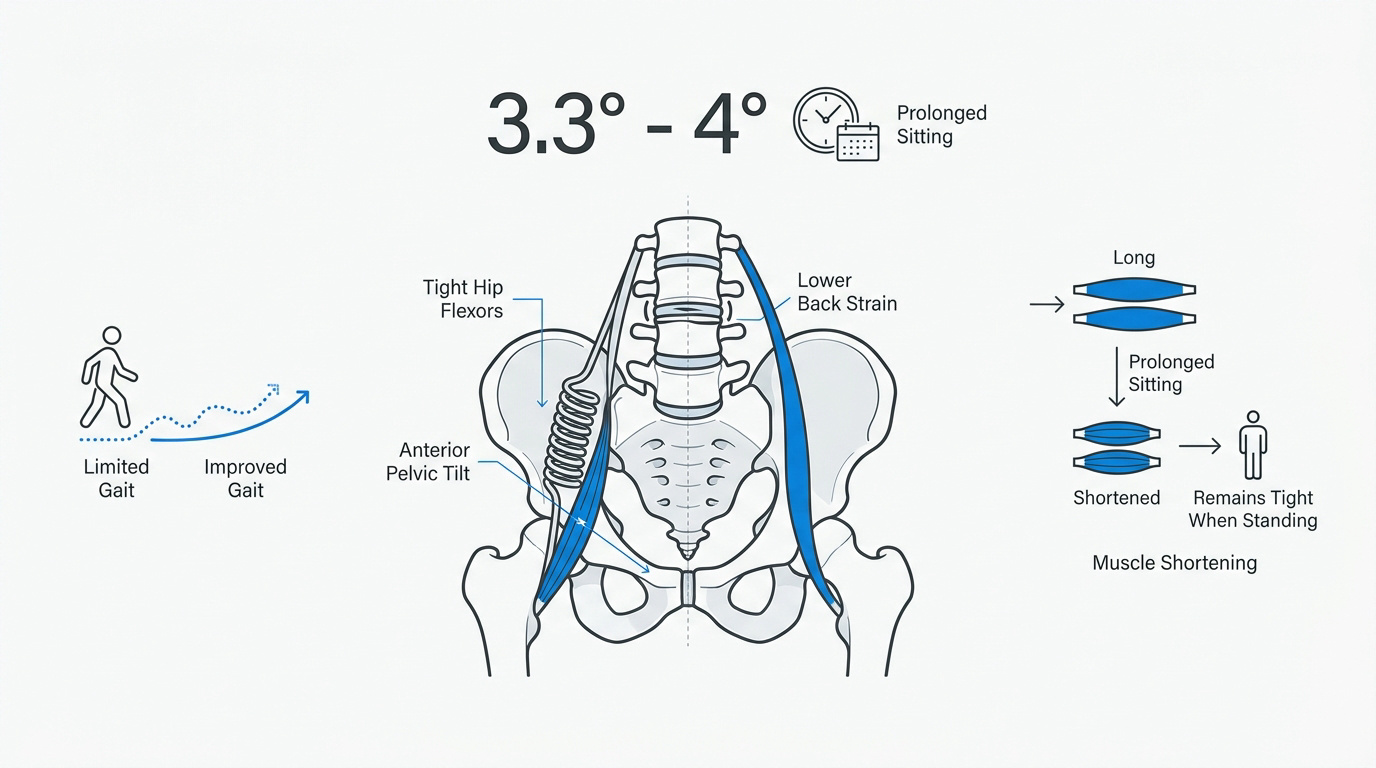
Prolonged sitting causes the psoas and iliacus to remain in a shortened state, leading to a loss of hip extension of up to 4 degrees. This mechanical adaptation often results in an anterior pelvic tilt and persistent lower back strain during daily activities. When these muscles lose their functional length, the body compensates by arching the spine, which creates a cycle of discomfort and reduced mobility.
Implementing a regular hip flexor stretch routine is a practical way to restore pelvic alignment and improve gait fluidly. This article examines effective techniques to release tension and strengthen the surrounding musculature for long term joint health.
- Hip Flexor Stretch and Its Role in Functional Mobility
- How to Master the Half-Kneeling Hip Flexor Stretch
- The 2 Factors Linking Core Strength to Hip Stiffness
- 3 Practical Ways to Maintain Hip Health Daily
Hip Flexor Stretch and Its Role in Functional Mobility
Tight hip flexors shorten by 3.3° to 4° during prolonged sitting, causing anterior pelvic tilt and lower back strain. Consistent stretching improves stride length and gait speed, especially when combined with posterior pelvic tilt techniques to isolate the psoas.
Sitting leads to a 3.3° to 4° shortening of hip flexors, impacting pelvic alignment and walking efficiency.
Identifying the Symptoms of Tight Hip Flexors
Stiffness manifests as tension at the front of your hip. You might notice a sharp pinch when rising from a chair quickly.
This rigidity restricts your range, making your gait feel choppy. Over time, steps become shorter and lose fluidity during a study on gait function.
Watch for an exaggerated arch in your lower back. This tilt signals that muscles are pulling the pelvis forward.
The Link Between Sitting and Muscle Shortening
Adaptive shortening occurs when you remain seated for hours. In this position, the psoas and iliacus muscles stay in a contracted, shortened state.
Muscles do not reset when you stand. Instead, they remain tight, tugging on your pelvis and lumbar spine throughout the day.
Your body accepts this poor posture as the default. This becomes difficult to correct without a dedicated hip flexor stretch routine as noted by Harvard Health on sitting risks.
Why Your Lower Back Pays the Price for Stiff Hips
The psoas attaches to your lumbar vertebrae, creating a mechanical pull. When tight, it tugs the spine forward, increasing disc pressure.
Your back muscles overwork to keep you upright. This struggle leads to chronic aches, fatigue, and a loss of stability.
Specific techniques help manage this. You might find that Acupressure Points for Back Pain: Relieve Your Pain offers a useful complementary approach to stretching.
How to Master the Half-Kneeling Hip Flexor Stretch
While understanding the “why” is vital, the “how” is where the actual relief begins through precise movement.
Step-by-Step Guide to Perfect Pelvic Alignment
Focus on the posterior pelvic tilt. Tuck your tailbone under and squeeze the glute of your kneeling leg. This creates the necessary tension.
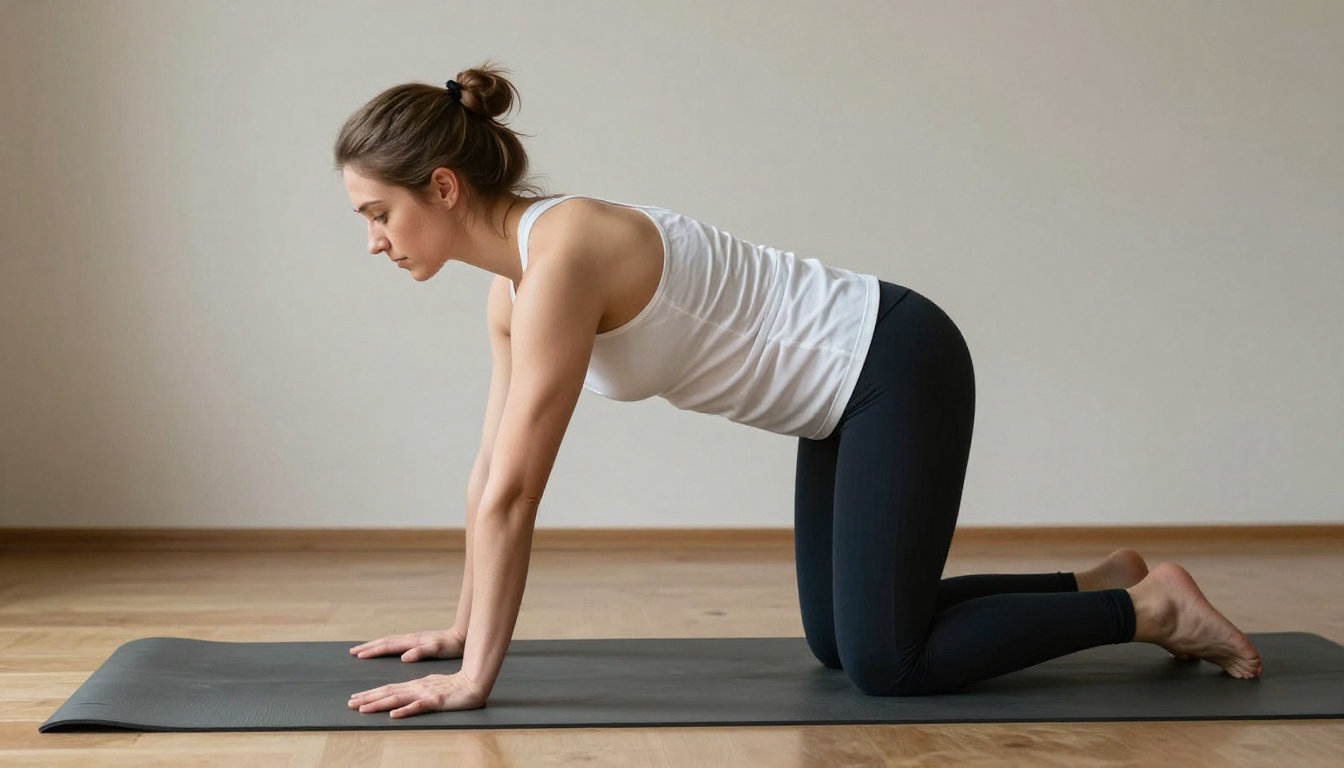
Adopt a stable setup. One knee is down on a mat, the other foot is flat in front.
Keep your torso upright. Do not lean forward yet; the tilt creates the stretch. Mastering the Hanumanasana Pose: Benefits and Technique offers further depth.
- Tuck tailbone under.
- Squeeze kneeling glute.
- One knee down, one foot flat.
- Keep torso upright.
Common Mistakes That Ruin Your Progress
Avoid arching your lower back. This “fake” mobility bypasses the hip flexors and stresses the spinal discs instead. Maintain a neutral spine.
Leaning too far forward is a mistake. It loses the pelvic tension needed to isolate the psoas effectively.
- Don’t hold your breath
- Don’t let the front knee collapse inward
- Don’t rush the hold
Safe Progressions for Deeper Hip Mobility
Describe the overhead arm reach. Raising the arm on the kneeling side increases the stretch through the entire fascial line. Reach high.
Try the “couch stretch” variation. Placing the back foot on a bench or sofa intensifies the quad involvement significantly.
Prioritize alignment. Mastering the vakrasana pose for spinal health helps maintain a resilient back during these deep hip openings.
The 2 Factors Linking Core Strength to Hip Stiffness
Stretching provides temporary relief, but long-term hip health requires looking at the muscles that support the joint.
This is a neurological process where the contraction of one muscle (the glutes) signals its opposing muscle (the hip flexors) to relax and release tension.
The Glute-Hip Flexor Relationship Explained
When glutes are weak, hip flexors stay “on” for stability. This creates constant tension through reciprocal inhibition. Activating the glutes allows flexors to relax. This break ends the stiffness cycle.
Weak glutes force the psoas to overwork. During walking, the hip flexor takes over as a stabilizer. This leads to chronic tightness.
Strong glutes defend hips. Focus on bridges and squats. These movements restore balance.
Strengthening Versus Stretching for Long-Term Health
Passive stretching feels good momentarily. However, active strength training builds lasting range. It provides superior joint control. Mobility requires more than just flexibility.
A balanced routine is vital. You must stretch what is tight. Simultaneously, strengthen what is weak. This approach finds true equilibrium.
Proper movement prevents pain. Explore Yoga Postures for Diseases: Healing Through the Body for alignment. Strength sustains your mobility.
3 Practical Ways to Maintain Hip Health Daily
Integrating these movements into your workday prevents the stiffness from accumulating in the first place.
Dynamic Movement Breaks for Office Workers
Perform standing leg swings regularly. These dynamic movements encourage blood flow. They gently remind the hip joint of its full range.
Try desk-friendly seated knee lifts. Breaking up sitting time every hour is a non-negotiable habit. It keeps the muscles active.
Incorporating a Massage Ball for Deep Tissue Release
Target the psoas with a tennis ball or lacrosse ball. Lay face down on the floor. Place the ball just inside your hip bone to find trigger points.
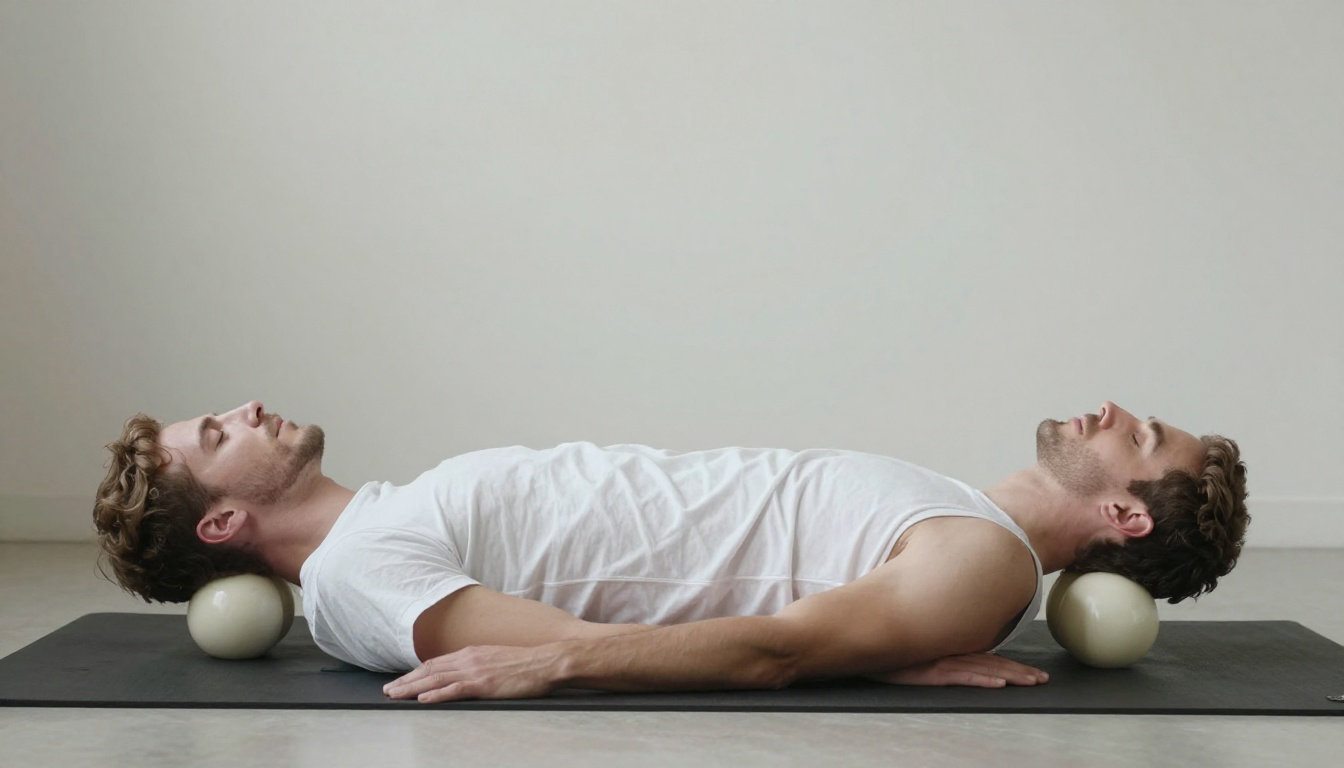
Use gentle pressure and breathe deeply. This manual release helps “unstick” the fascia. Do this before you start your active hip flexor stretch.
Frequency and Duration for Visible Results
Hold static stretches for at least 30 to 60 seconds. This duration allows the nervous system to relax. It ensures the muscle fibers lengthen effectively.
Consistency is the secret to long-term mobility. Follow this structured schedule to track your progress and maintain healthy, functional hips throughout the week.
| Activity | Frequency | Duration | Goal |
|---|---|---|---|
| Half-kneeling stretch | Daily | 30-60s | Lengthen hip flexors |
| Glute bridges | 3x Weekly | 30s holds | Activate posterior chain |
| Movement breaks | Hourly | 1-2 mins | Reduce sitting stiffness |
| Massage ball release | Daily | 2-3 mins | Release deep tension |
Consistent practice of the half-kneeling hip flexor stretch, combined with glute activation and pelvic alignment, is essential to restore mobility and eliminate lower back strain. By integrating these daily movements now, you will soon enjoy fluid steps and a pain-free, upright posture. Reclaim your natural range of motion for lasting physical freedom.