
The Sanskrit salutation Namaste is rooted in ancient Vedic literature and archaeological findings from the Indus Valley Civilization dating back to the second millennium BCE. This traditional greeting, which literally translates to “I bow to you,” combines the roots namas and te through specific phonetic rules of Sanskrit sandhi.
Many practitioners use the term daily without fully grasping the ego-transcending philosophy or the technical precision of the accompanying gesture. This article explains the linguistic origins, spiritual significance, and proper etiquette of the namaste meaning to help you honor its sacred heritage during your practice.
- Namaste Meaning And Its Literal Sanskrit Origins
- 3 Technical Steps To Perform The Añjali Mudrā
- How Does The Spiritual Philosophy Recognize The Divine?
- Modern Yoga Context And Cultural Considerations
Namaste Meaning And Its Literal Sanskrit Origins
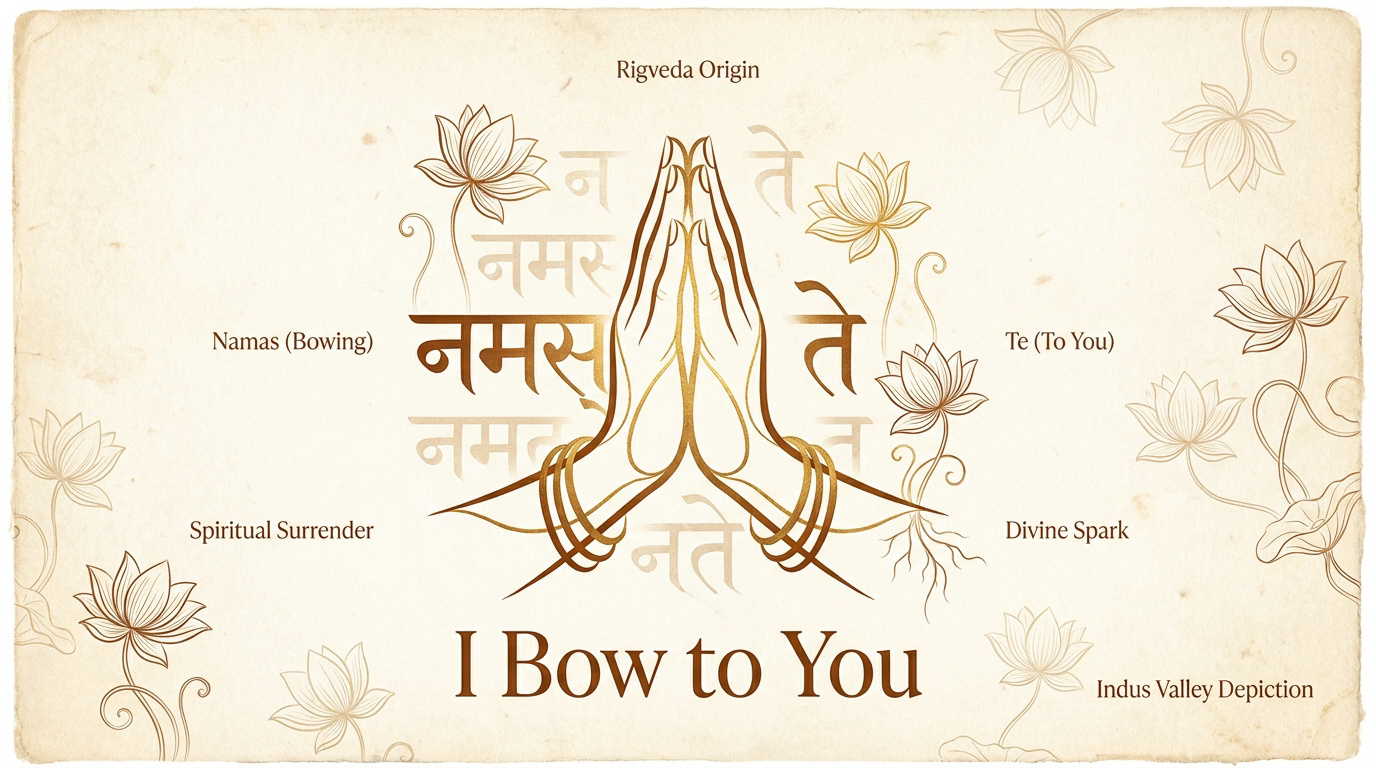
Namaste combines the Sanskrit roots “namas” (bowing) and “te” (to you), signifying a spiritual surrender of the ego. This Vedic greeting, often paired with the Añjali Mudrā, recognizes the divine spark within every individual.
The linguistic roots provide the foundation for understanding how this ancient term functions as a bridge between the physical and spiritual realms.
Namas: Salute, reverence, or adoration. Te: To you. Literal meaning: I bow to you.
Etymological Breakdown Of The Roots Namas And Te
The literal translation “I bow to you” stems from the roots Namas and Te. Beyond a simple hello, the concept of “na ma” implies “not mine.” This philosophical nuance serves to reduce the speaker’s ego during the interaction.
Sanskrit grammar dictates the specific phonetic junction, or sandhi, that creates the final word. This merging of sounds transforms two distinct parts into a single, powerful salutation. It has remained linguistically consistent for centuries across various traditions.
You can explore the Namaste literal meaning to see how the dative case of “te” functions. This linguistic structure confirms its role as a formal act of offering respect.
Historical Presence In Vedic Literature And Ancient Texts
Historical records trace this term back to the Rigveda. This greeting appears in the oldest layers of Sanskrit literature. These texts date back to the second millennium BCE, showing its deep historical roots.
Archaeological evidence supports this antiquity through Indus Valley Civilization artifacts. Figures discovered in a prayer-like posture suggest the gesture existed during the Bronze Age. These findings prove the physical salute has survived through several millennia.
The continuity of this practice is documented in the origins of Namaste in Vedic teachings. These ancient sources ground the term in a tradition of veneration that remains active in modern culture.
3 Technical Steps To Perform The Añjali Mudrā
While the word carries the weight of history, the physical gesture known as Añjali Mudrā gives that meaning a visible, tangible form.
Proper Hand Placement And Thumb Alignment Details
You simply press your palms together firmly at the heart center. Your thumbs should lightly touch the sternum. Fingers must point upward toward the sky. Keep a slight gap between the palms to create a dome.
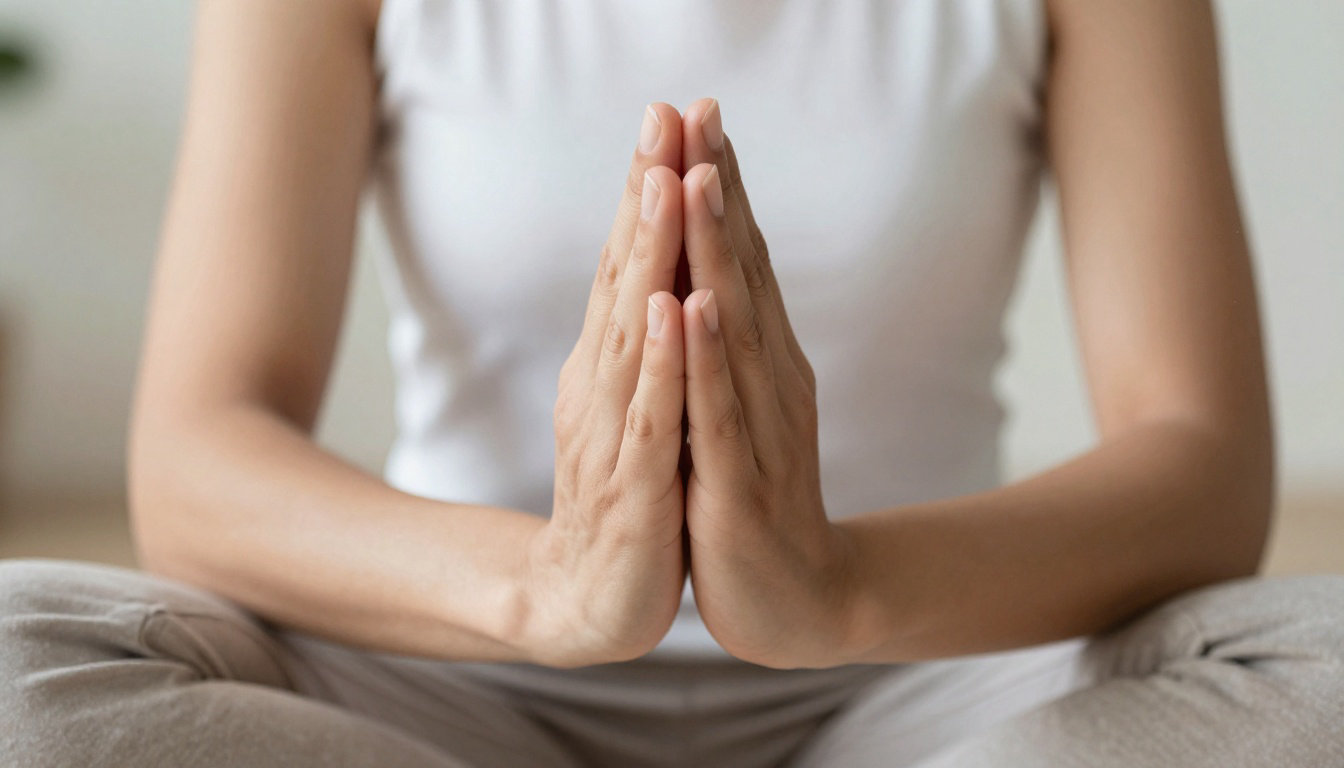
A gentle bow of the head completes the movement. This act symbolizes the mind bowing to the heart’s wisdom. It is a core part of sacred yoga mudras used for centring.
- Press palms together at heart center.
- Align thumbs to touch the sternum.
- Point fingers upward with a slight gap between palms.
- Accompany with a gentle bow of the head.
Evolution From Temple Iconography To Modern Greeting
This mudra remains a fundamental posture in Indian classical dance. It appears frequently in Bharatanatyam and Odissi temple traditions.
Joining the left and right hands represents merging dualities. It unites masculine and feminine or sun and moon. This creates a symbolic internal balance.
Eventually, this temple art transitioned into a daily social greeting. It became a mark of universal respect across India. The namaste meaning thus became visible in everyday life.
Adoption As A Hygienic Alternative To Handshakes
The no-touch nature of this greeting allows for a respectful connection. It avoids physical contact entirely. This became globally relevant during recent health crises.
World leaders recently adopted the gesture in diplomatic settings. It replaced handshakes as a safer way to show courtesy. Leaders like the Prince Charles used it publicly.
The gesture is remarkably efficient for social recognition. It communicates warmth instantly across a room. You do not even need to move to acknowledge someone.
How Does The Spiritual Philosophy Recognize The Divine?
Beyond the physical mechanics, the true power of this greeting lies in the profound spiritual recognition that occurs between two souls.
Recognizing The Divine Spark In Every Individual
The soul carries an inner light. This greeting acknowledges that the same universal spark resides within every person. It effectively removes social barriers and hierarchies during salutation.
Mahatma Gandhi famously noted that the divine in me honors the divine in you. He spoke of honoring the place where the entire universe resides. This creates a deep, sacred connection.
Regional Variations Between Namaste And Namaskar
Terminology often changes by context. Namaskar is generally more formal or used for groups. Namaste serves better for individuals or intimate settings.
Preferences vary across the Indian subcontinent. In many regions, Namaskar remains the standard polite greeting. Both terms share the root meaning of bowing with respect.
- Namaste: common in North India
- Namaskar: prevalent in Maharashtra and Bengal
- Namaskaram: the formal version used in South India
Traditional Protocols For Addressing Different Groups
Etiquette demands specific gestures for elders. When greeting a teacher, the bow becomes deeper. Hands may rise higher toward the forehead to show reverence.
The practice remains inclusive across faiths. While rooted in Hinduism, it functions as a secular social standard. It integrates well with meditation and energy practices.
Modern Yoga Context And Cultural Considerations
As this ancient greeting traveled West, it found a new home in yoga studios, though its application there requires a nuanced understanding.
Why Yoga Teachers Use The Term To End Sessions
The word signals practice closure. It offers shared gratitude. It seals class energy.
Teachers acknowledge mutual respect. They remain lifelong students. This promotes balancing energy with Nadi Shodhana.
Navigating Appropriation Versus Appreciation In The West
Avoid trendy puns or merchandise. Respect sacred Sanskrit origins. Maintain cultural sensitivity always.
Use intention, not habit. History transforms the word. It shows sincere appreciation.
Avoid using Namaste as a pun or on commercial merchandise. Respect its sacred Sanskrit origins and use with intention.
Clarifying Secular Usage For Non-Hindus And Christians
Faith remains entirely personal. This is a cultural greeting. It emphasizes human connection.
Indian shopkeepers use it daily. It is a polite hello. It remains a secular gesture.
Learn about cultural usage of Namaste. This builds genuine understanding.
| Context | Primary Meaning | Common Setting |
|---|---|---|
| Traditional India | Respectful greeting | Social |
| Western Yoga | Gratitude/closure | Studios |
| Spiritual Practice | Divine recognition | Meditation |
| Social Interaction | Hygienic hello | Public |
Understanding the namaste meaning reveals a profound spiritual bridge: it reduces the ego through the Sanskrit roots “namas” and “te,” honors the universal divine spark, and unites dualities via the Anjali Mudrā. Apply this ancient wisdom to foster respectful, conscious connections in your daily life. Honor the sacred within others to transform every greeting into a moment of peace.