
A single 100-gram serving of fresh indian gooseberry contains as much vitamin C as 20 oranges, making it one of the most nutrient-dense superfruits available. This small, greenish-yellow berry from the Phyllanthus emblica tree has been a cornerstone of Ayurvedic medicine for over a millennium due to its high concentration of tannins and flavonoids.
Despite these impressive nutritional markers, many people struggle to incorporate its naturally bitter and astringent taste into a modern diet. This article provides a clear overview of the metabolic benefits and practical applications of this fruit to help you optimize your health routine.
- Indian Gooseberry Characteristics and Nutritional Density
- Metabolic and Cardiovascular Effects of Amla
- Practical Applications for Consumption and Beauty
- Safety Protocols and Supplement Selection
Indian Gooseberry Characteristics and Nutritional Density
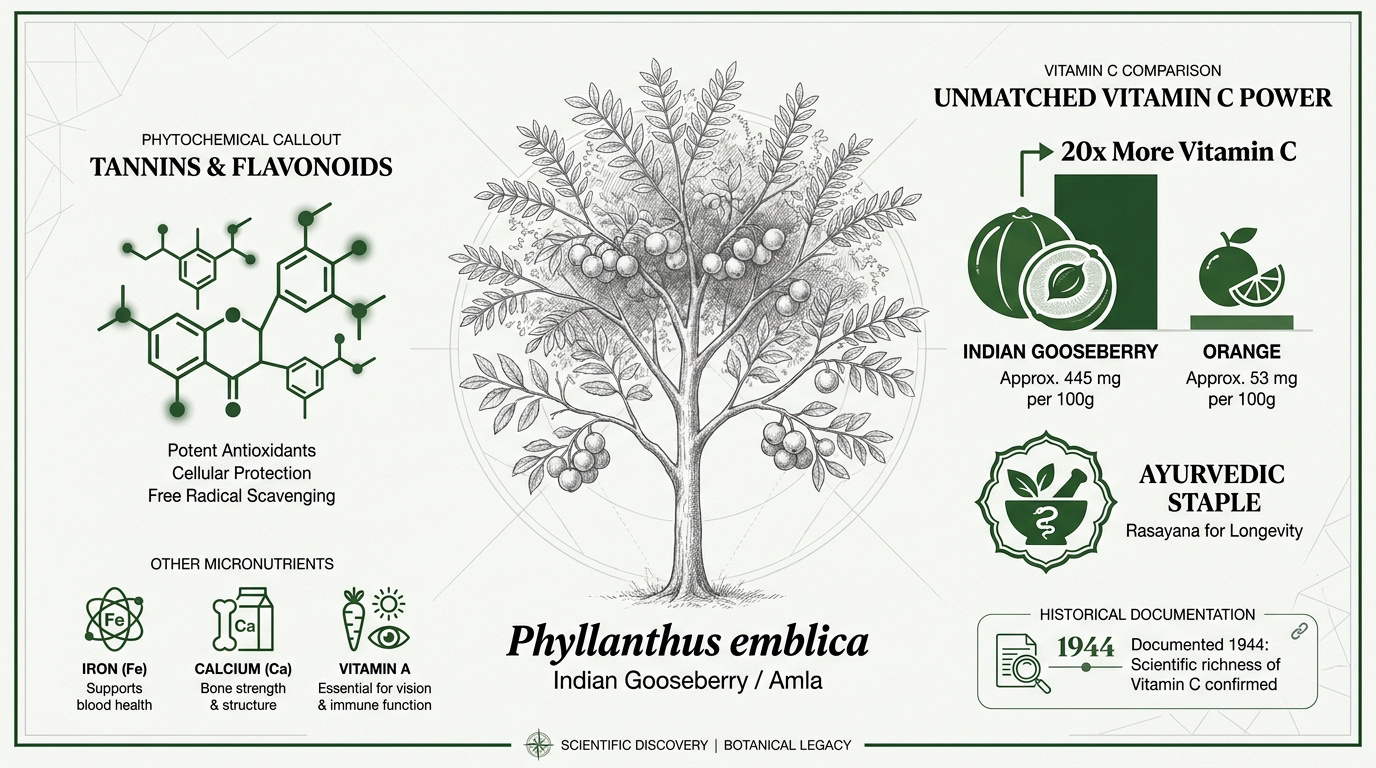
Indian gooseberry, or Amla, contains twenty times more vitamin C than oranges. This Ayurvedic staple features a unique phytochemical profile of tannins and flavonoids, distinguishing it from European varieties through its potent antioxidant density.
The botanical distinction between these species leads directly into the fascinating origins of the Phyllanthus emblica tree.
Botanical Origins and Ayurvedic History
The Phyllanthus emblica is a deciduous tree of small to medium stature. It produces small, greenish-yellow globose fruits with a smooth, hard appearance. The leaves are simple and closely spaced along the branches.
Amla (Phyllanthus emblica): A tropical Ayurvedic ‘rasayana’ tree fruit.
European Gooseberry (Ribes uva-crispa): A temperate shrub berry with different therapeutic properties.
In Ayurveda, Amla serves as a “rasayana” for longevity and vital rejuvenation. It balances the three doshas and promotes systemic health. This tropical tree differs fundamentally from the European Ribes uva-crispa, which is primarily a culinary shrub.
This species remains a sacred tree in Indian culture. It holds immense traditional medicinal prestige within the Hindu and Buddhist faiths.
Phytochemical Profile and Vitamin C Concentration
Indian gooseberry is famous for its record-breaking vitamin C levels. This extraordinary concentration was notably documented in scientific literature as early as 1944. Three phrases define its nutritional dominance.
- Vitamin C: 20x more than oranges per 100g.
- History: Documented in scientific journals since 1944.
- Legacy: Over 1,000 years of traditional Ayurvedic use.
Key secondary metabolites include tannins, flavonoids, and ellagitannins like emblicanin. These specific compounds are vital because they stabilize the vitamin C content. This protection ensures the nutrient remains potent during drying or heat processing.
The fruit also provides iron, calcium, and vitamin A. Its overall density of bioactive polyphenols supports robust cellular health and immunity.
Metabolic and Cardiovascular Effects of Amla
Beyond its botanical identity, the true power of Amla lies in its profound impact on internal metabolic markers and heart health.
Cholesterol Regulation and Endothelial Function
Amla manages LDL cholesterol and triglycerides effectively. It inhibits the HMG-CoA reductase enzyme naturally. This process helps lower lipid levels without common pharmaceutical side effects.
The fruit supports endothelial health and blood vessel linings. This mechanism prevents plaque buildup within arteries. Consequently, it maintains essential arterial flexibility over long periods.
Soluble fiber slows glucose absorption; Amla inhibits HMG-CoA reductase for cholesterol management; Vitamin C aids iron absorption.
Blood Sugar Management and Insulin Sensitivity
Soluble fiber plays a major role in slowing glucose absorption. Amla protects pancreatic cells from harmful oxidative damage. These combined actions lead to a visible improvement in fasting blood sugar levels.
This protection enhances overall insulin sensitivity. Such properties make the berry a valuable dietary addition for maintaining metabolic balance.
Oxidative Stress and Immune System Support
Polyphenols neutralize free radicals to protect cellular integrity. Recent research suggests that indian gooseberry improves resistance to oxidative stress in biological models. This helps restore the body’s natural redox balance.
The fruit stimulates white blood cells to bolster immunity. It also supports cognitive health by aiding norepinephrine production. This provides neuroprotection against damage from free radicals.
Practical Applications for Consumption and Beauty
While the internal benefits are clear, applying this “superfruit” to your daily routine requires specific culinary and cosmetic techniques.
Culinary Techniques for Fresh and Dried Fruit
Fresh indian gooseberry is naturally sharp and astringent. You can balance this by adding salt or honey. These additions make the fruit much more palatable.
- Fresh with a pinch of salt
- Dried powder in smoothies
- Traditional sweet murabba
- Pickled as a side dish
Integrate it into recipes like pickles or dal. Powder offers great convenience for smoothies. However, whole fruit remains the most potent source of nutrients.
Topical Uses for Hair and Skin Health
Applying amla oil directly to the scalp strengthens hair follicles. This deep nourishment helps inhibit enzymes responsible for thinning. It is a staple for maintaining hair density.
Vitamin C prevents collagen breakdown in the skin. It acts as a natural anti-aging agent in topical serums. Regular application protects the dermis from cellular damage.
Comparison of Supplement Forms and Extracts
Juice, capsules, and extracts differ in their nutrient concentration. Processing can impact the bioavailability of antioxidants like vitamin C. Clinical observations suggest following consistent daily intake guidelines.

Juice usually offers faster-acting absorption for the system. Standardized capsules provide a portable and convenient alternative. Both forms effectively deliver the fruit’s protective polyphenols.
Safety Protocols and Supplement Selection
Before adding these potent extracts to your regimen, understanding safety boundaries and quality standards is paramount.
Anticoagulant effects: Risk for patients on blood thinners or pre-surgery. Hypoglycemia risk: Potential for blood sugar to drop too low when combined with diabetes medication.
Drug Interactions and Specific Contraindications
Amla acts as a natural anticoagulant. This property may increase bleeding risks for individuals on blood thinners. It is particularly concerning during surgery or after an injury.
Interaction with diabetes medication requires vigilance. Combining indian gooseberry with insulin can lead to hypoglycemia. You should consult a physician to ensure proper dosage adjustments are made safely.
Pregnant or breastfeeding women must exercise caution. There is currently a lack of long-term safety data for these groups. Internal consumption is generally discouraged during these periods.
Professional medical advice remains indispensable. Always prioritize safety over self-supplementation.
Criteria for Sourcing High-Quality Organic Products
Purity markers are the foundation of a good supplement. Third-party testing is required to confirm the absence of heavy metals. It also ensures no pesticides contaminate the final product.
Modern classification of fruit quality by statistical analysis now allows for precise raw material selection. This technological approach guarantees that only the best berries are processed for therapeutic use.
Authentic powder should have a light tan color. The texture must be fine and non-clumpy. Avoid any products containing added sugars or artificial fillers that dilute the nutritional profile.
Organic certification is a non-negotiable standard. This guarantees the highest level of phytochemical integrity.
| Form | Primary Use | Best For | Recommended Quality Marker |
|---|---|---|---|
| Fresh Fruit | Culinary | Direct consumption | Firm, yellow-green skin |
| Dried Powder | Smoothies/Masks | Daily nutrition | Light tan color, fine texture |
| Cold-Pressed Oil | Hair/Scalp | Beauty routines | Hexane-free, 100% pure |
| Standardized Extract | Therapeutic dosage | Specific health goals | High phenolic content (HPLC) |
Indian gooseberry offers exceptional vitamin C density and antioxidant support for cardiovascular and metabolic health. Integrating this superfruit into your daily regimen now ensures long-term cellular protection and vitality. Start your wellness journey today to experience these traditional Ayurvedic benefits for a healthier future.