
Chronic low back pain remains a leading cause of global disability, often resulting from muscle shortening due to prolonged sitting. Maintaining spinal health requires a balance between bone alignment and muscle flexibility to prevent stiffness and long-term strain. However, many individuals struggle to distinguish between simple muscle tension and more complex nerve issues like sciatica before starting a routine.
This article provides a structured approach to back stretches to help you release tension and restore daily mobility safely. We will examine effective movements and breathing techniques to ensure your recovery is both sustainable and anatomically correct.
- Why Back Stretches Matter for Spinal Health
- Primary Movements for Daily Mobility
- Targeting Specific Pain Areas with Focused Routines
- Building a Sustainable Habit for Long-Term Relief
Why Back Stretches Matter for Spinal Health
Chronic low back pain is a leading global disability, often triggered by shortened muscles from prolonged sitting. Regular stretching restores harmony between bones and joints, while specific techniques like diaphragmatic breathing accelerate muscle fiber recovery and tension release.
Understanding the precise nature of your discomfort is the first step toward relief, as muscle tension requires a different approach than nerve irritation.
Distinguishing Between Muscle Strain and Nerve Issues
Muscle pain typically feels like a dull, localized ache. It often follows intense physical effort or poor posture. This stiffness usually improves with rest and gentle movement.
Nerve pain behaves differently by radiating down the legs. It often manifests as sharp burning or tingling sensations. Such issues stems from compression, affecting both mobility and feeling.
Knowing when to perform back stretches is vital for recovery. Improper movement might worsen nerve irritation. Seek Harvard Health on muscle tension for guidance on managing stiffness safely.
Identifying Warning Signs to Consult a Professional
Certain symptoms signal a medical emergency. Loss of bladder control or numbness in the genital area requires immediate help. Sudden weakness in the legs is equally serious. Never ignore these signs.
Seek urgent care for numbness, loss of bladder control, sudden weakness, or sharp radiating pain that differs from dull aches.
Chronic issues necessitate professional medical clearance. A physical therapist creates a tailored plan. This ensures your routine remains safe and effective for your specific spine.
Forcing positions during acute injury phases is dangerous. Pushing through sharp pain increases inflammation. This often leads to significantly longer recovery times and further damage.
Mastering Breathing Techniques to Deepen the Stretch
The diaphragm plays a central role in relaxing the nervous system. Deep belly breaths signal the body to release defensive tension. This process facilitates a deeper, safer stretch.
Always exhale during the deepest part of the movement. This synchronization prevents muscle guarding. It allows for a more effective range of motion without straining the tissues.
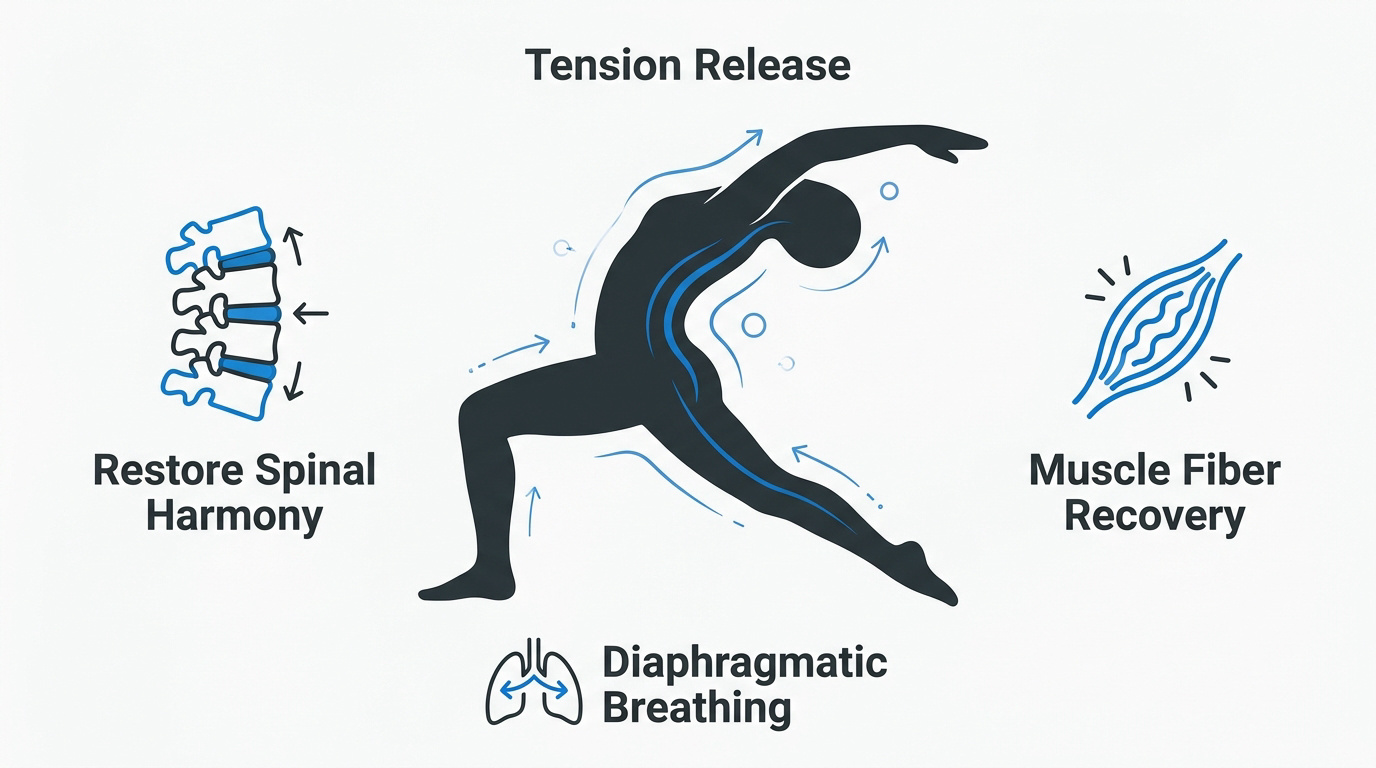
Oxygen flow is essential for muscle fiber recovery. Integrating Nadi Shodhana Pranayama: Purifying the Energy Channels can further calm the system and enhance your results.
Primary Movements for Daily Mobility
Moving from theory to practice, these foundational floor exercises provide the immediate relief most aching backs crave.
Relieving Tension with Child’s Pose and Knee-to-Chest
Start by lying on your back for the knee-to-chest stretch. Pull your knees gently toward your ribs to lengthen the lumbar spine. This position effectively releases pressure in the lower back area.
- Neutral spine alignment
- Relaxed shoulders
- Hips resting on heels for Child’s Pose
Suggest using cushions to support the neck or knees for comfort. Modifications make these poses accessible for everyone. Small adjustments often prevent unnecessary strain during your back stretches routine.
Improving Spinal Articulation Through Cat-Cow
The rhythmic transition between arching and rounding the back mobilizes the entire spine. Inhale as you drop the belly toward the floor. Exhale as you tuck the chin and pelvic bone.
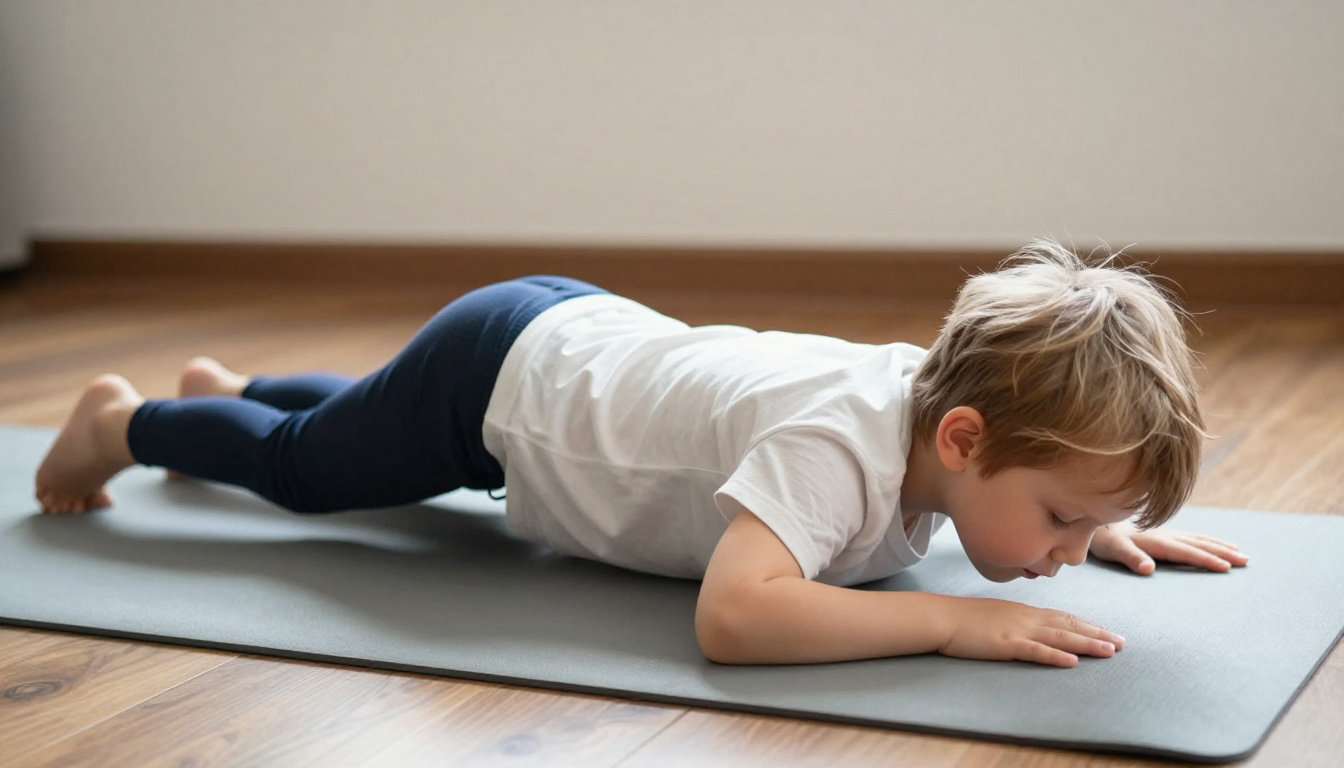
This movement benefits both the thoracic and lumbar spine areas significantly. It lubricates the spinal discs through gentle motion. Consistent practice improves overall vertebral flexibility and reduces morning stiffness.
Warn against jerky movements to protect the vertebrae from injury. Smooth transitions are key to avoiding sudden muscle spasms. Focus on a slow, controlled pace to ensure maximum safety and effectiveness.
Modifying Positions for Different Fitness Levels
Propose variations for those with limited range of motion or joint pain. Use blocks or folded blankets to bring the floor closer. Don’t force depth if you feel sharp resistance.
Ideal for seniors or those with balance issues. Use a stable chair for seated spinal twists or supported forward folds.
Place hands on a chair back and walk feet away. This stretches the spine without requiring floor access or kneeling.
Describe how to adjust intensity based on daily stiffness levels. Listen to your body every single morning. Adapting the stretch to your current capacity prevents overexertion and promotes long-term health.
Targeting Specific Pain Areas with Focused Routines
While general mobility is great, sometimes you need a surgical strike on a specific knot or a nagging sciatic nerve.
Releasing the Upper Back and Neck During Work
Relieve your traps by performing ear-to-shoulder tilts while seated. Squeeze your shoulder blades together to activate rhomboïdes. These movements release tension between omoplates.
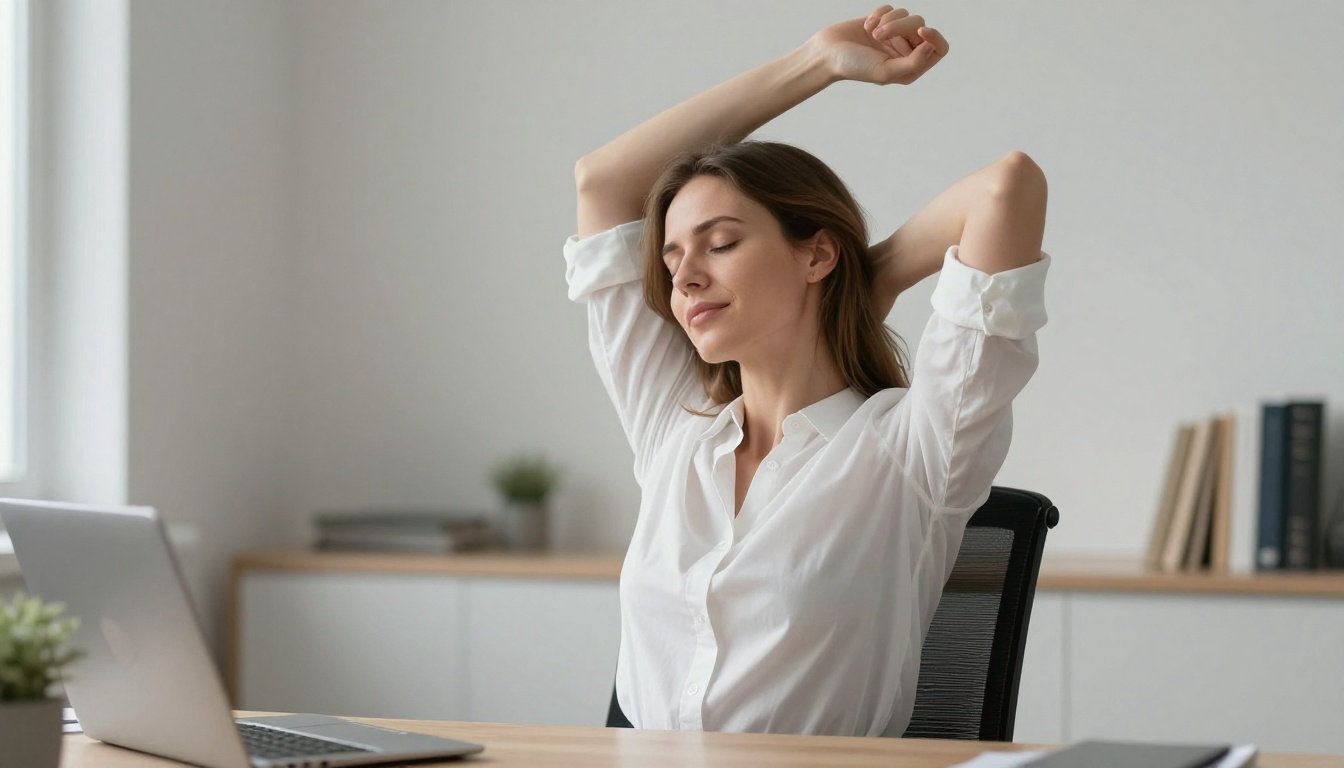
Modern “tech neck” is a real postural threat today. Adjust your monitor height to keep eyes level. Maintaining a straight back prevents muscular strain.
Quick breaks restore blood flow for sedentary workers. Discover how Chiropractic Care and Stress: Release Your Tensions Lastingly to manage these daily pressures effectively.
Addressing Lower Back Stiffness and Sciatica
Tight legs pull the pelvis out of alignment, creating lumbar strain. Focus on stretching hamstrings to restore balance, as noted by Harvard Health on hamstrings and back pain.
The piriformis muscle can directly irritate the sciatic nerve when glutes are tight. This tension manifests as radiating discomfort in the lower back.
Small, controlled twists help decompress spinal segments safely. These rotations alleviate pressure on vertebrae without requiring aggressive or sudden movements.
Balancing Flexibility with Core Stabilization Exercises
Stretching is only half the battle for a healthy spine. You need a “muscular corset” for protection. Contrast passive lengthening with active spinal support.
A strong core acts as a natural brace for vertebrae. Stability beats flexibility when preventing injuries. It ensures your back stretches remain safe.
Add simple planks or bird-dogs to your routine. These exercises build endurance without compromising spinal integrity, fostering a neutral and protected posture.
Building a Sustainable Habit for Long-Term Relief
Consistency is the secret sauce that turns a one-time stretch into a lifetime of pain-free movement.
Setting Frequency and Duration for Best Results
I recommend a daily 15-minute window to maintain spinal consistency. Small daily doses are better than one long weekly session. Make it a non-negotiable habit for success.
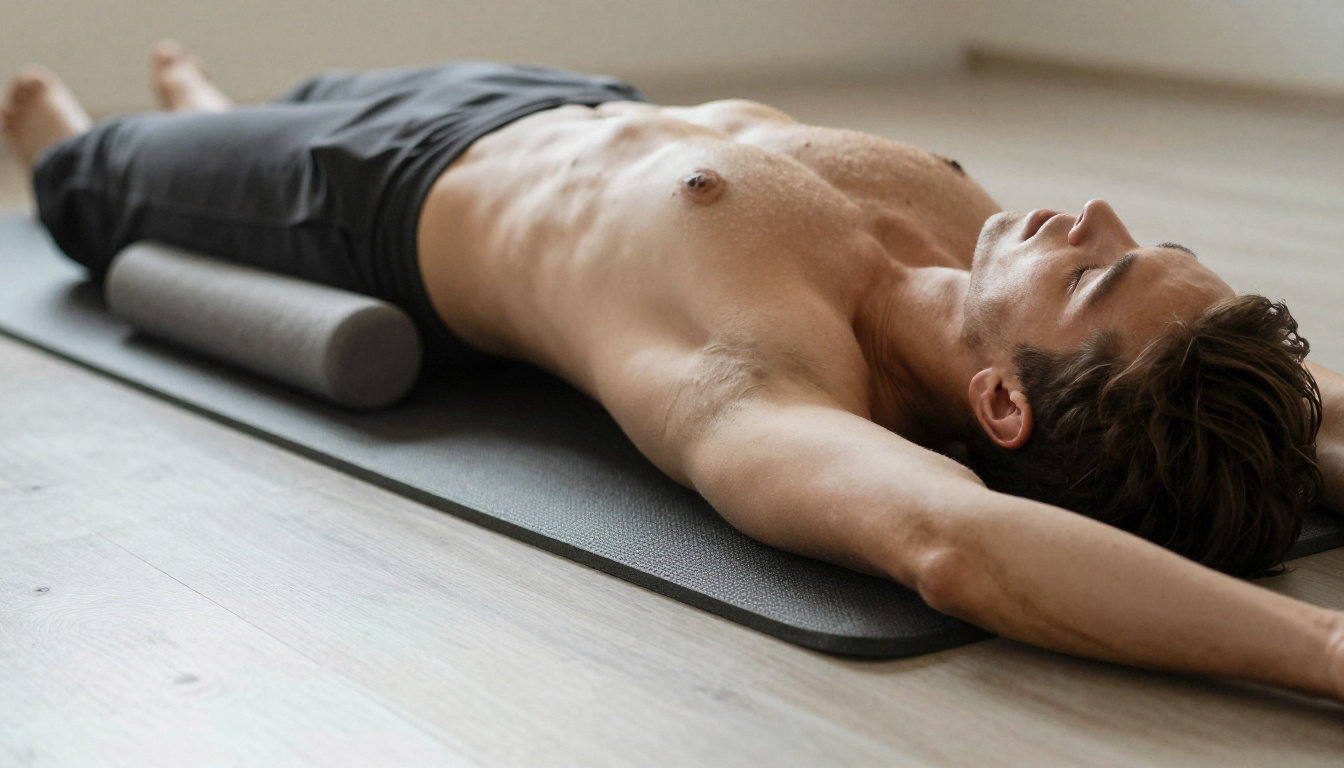
Stretching both morning and night offers distinct benefits. The morning wakes up your joints effectively. Night releases tension, helping you sleep without stiffness or painful cramping.
Hold each position for 30 to 60 seconds. Give the fascia time to actually change.
Using Myofascial Tools and Hydration for Recovery
Use foam rolling for the mid-back and lats. This breaks up stubborn knots and adhesions. It feels like a deep tissue massage right at home.
Water intake keeps spinal discs hydrated and resilient. These discs are mostly water and need fluid. Dehydration leads to disc thinning and discomfort.
Increased blood flow is vital. Circulation brings nutrients to recovering muscle tissues.
Adjusting Ergonomics for Sitting, Lifting, and Sleeping
| Activity | Common Mistake | Ergonomic Fix |
|---|---|---|
| Sitting at desk | Slouching forward. | Keep back supported. |
| Lifting heavy objects | Bending at waist. | Bend at knees. |
| Sleeping position | Sleeping on stomach. | Sleep on your side. |
| Driving | Leaning far back. | Sit upright and close. |
Side sleeping with a pillow between the knees is often best. It maintains proper spinal alignment. Avoid stomach sleeping whenever possible to prevent strain.
Safe lifting mechanics prevent painful re-injury. Always bend at the knees, not the waist. Keep the load close to your center of gravity.
Integrating daily mobility movements restores spinal alignment and releases deep muscular tension. By synchronizing these back stretches with diaphragmatic breathing, you ensure lasting recovery and improved posture. Start your routine today to enjoy a flexible, pain-free future and reclaim your physical freedom.