
Did you know that the Muladhara chakra is considered the literal root of our existence and the foundation of the entire human energetic system? Many people struggle with persistent feelings of anxiety or financial instability without realizing their primary energy center is out of alignment.
This article provides a detailed analysis of the root chakra to help you restore your sense of security and physical vitality through proven traditional techniques.
- The Core Principles of the Muladhara Chakra
- Decoding the Sacred Symbols and Elements
- How to Identify Symptoms of a Blocked Root?
- Scientific and Psychological Dimensions of Grounding
- 5 Practical Techniques for Daily Activation
The Core Principles of the Muladhara Chakra
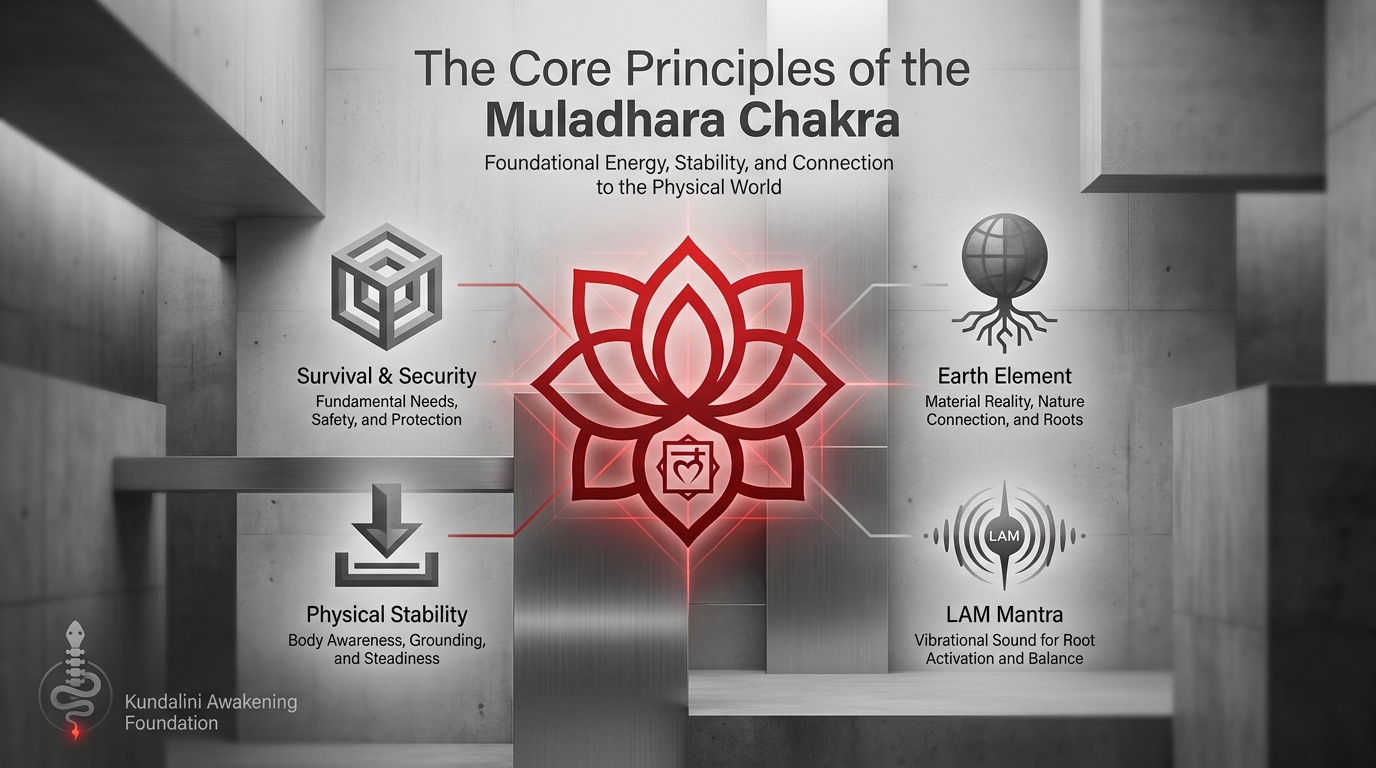
The Muladhara, or root chakra, sits at the spine’s base, governing survival, security, and physical stability. It relies on the earth element and the LAM mantra to resolve blockages linked to fear or instability.
The etymological roots of this energy center reveal its fundamental role in the human experience.
Mula (root) + Adhara (base/support). The literal foundation of the energetic system.
Etymology and the Concept of the Root
Muladhara comes from the Sanskrit words “Mula,” meaning root, and “Adhara,” which translates to base. This name defines its role as the primary support for our entire existence.
Its function mimics a tree’s roots, providing essential stability. By anchoring the energetic body to the physical world, it allows us to remain steady amidst life’s inevitable storms and changes.
This center serves as the seat of primal energy. It manages our most basic human survival instincts.
A solid base fosters a deep sentiment de stabilité et de sécurité. Feeling safe is the first step toward true belonging.
Physical Location in the Pelvic Floor
The chakra is located precisely at the perineum, at the base of the spine. It sits near the coccygeal plexus, between the anus and the genitals.
This physical placement connects our body to a sense of presence. Feeling the floor beneath you creates an immediate and powerful grounding effect.
The pelvic floor directly influences our physical posture. A strong, engaged base supports the skeletal structure and prevents fatigue throughout the day.
Sensory awareness in this region is vital. It acts as the physical anchor for our consciousness in the material world.
The Role as the System’s Foundation
Balance must begin here because a house requires a solid foundation. Without a stable root, the higher chakras will always remain fragile and unstable.
Survival and spiritual growth are deeply linked. We cannot pursue enlightenment if our basic needs, like food or shelter, feel constantly threatened.
Energy flows upward through the system. It must start at the Muladhara before it can reach the crown.
Grounding is not optional; it is a necessity. It remains the absolute prerequisite for all meaningful spiritual work.
Decoding the Sacred Symbols and Elements
Understanding the energetic mechanics is one thing, but the ancient symbols offer a deeper, visual language for this grounding force.
The Four-Petaled Lotus and Earth Element
The vibrant red color defines this center. It represents raw vitality and heat. This shade embodies the power of the earth.

The Earth element, or Prithvi, brings specific qualities. It offers weight, density, and permanence. This element provides the literal ground for our existence.
The four petals represent the states of mind: Manas (sensory mind), Buddhi (intellect), Chitta (consciousness), and Ahamkara (ego).
Four petals direct mental energy. Each one governs a specific psychological function. They form the muladhara foundation for our conscious experience.
Visualizing the red lotus stabilizes the mind. It serves as a tool for fondation et l’ancrage. This practice secures your focus.
The Elephant with Seven Trunks and the Triangle
The elephant symbolizes immense strength. It carries heavy burdens with ease. This animal represents the stability of the root.
Seven trunks grace this sacred elephant. Each trunk corresponds to a mineral. These vital saps are required for physical health.
The inverted triangle indicates a downward pull. It symbolizes spirit grounding into matter. This shape marks the seat of the Kundalini.
These symbols work together perfectly. They create a map for deep meditation. Practitioners follow these visual cues to find balance.
How to Identify Symptoms of a Blocked Root?
When these symbolic energies fall out of alignment, the body and mind send clear distress signals that we often ignore.
Physical Signs and Digestive Health
Physical ailments often manifest in the lower body first. You might experience persistent lower back pain. Issues with the legs or feet frequently reflect a lack of foundational support.

Digestive health is also closely linked to this center. Constipation and colon issues are common signs of a blockage. The root governs elimination processes and the ability to let go of waste.
General fatigue or a sense of sluggishness often prevails. A weak root fails to draw vital energy from the earth. This leaves the body feeling permanently drained and heavy.
| Symptom Category | Physical Manifestation | Emotional Impact |
|---|---|---|
| Digestive | Constipation, colon issues | Inability to let go |
| Skeletal | Lower back, leg, or foot pain | Feeling unsupported |
| Nervous System | Fatigue, sleep disturbances | Hyper-vigilance and fear |
| Financial | Low physical vitality | Stress over survival needs |
Emotional Instability and Persistent Fear
Feelings of insecurity and anxiety often dominate daily life. A “not enough” mindset takes hold of the subconscious. This frequently manifests as chronic financial stress or survival worries.
Trauma is often stored within this energetic foundation. Childhood experiences of abandonment or instability leave deep marks. These patterns create a constant state of hyper-vigilance in the adult years.
Many people describe a feeling of being “spaced out.” This lack of grounding causes sensations d’instabilité and disconnection. One struggles to stay present with daily responsibilities.
Distinguishing Between Underactive and Overactive States
Underactive states involve lethargy, fear, and a sense of disconnection. Conversely, overactive states lead to greed, aggression, and extreme materialism. An overactive root clings too tightly to the physical world.
Self-assessment requires looking at your daily habits. Do you struggle with hoarding or an inability to sit still? These behaviors reveal the specific direction of your energy flow.
The ultimate goal is “Sama,” which refers to perfect balance. It is not about simply having more energy. It is about cultivating the right quality of stable energy for muladhara.
Scientific and Psychological Dimensions of Grounding
While ancient texts provide the map, modern science and psychology offer a fascinating bridge.
The Nervous System and Fight-or-Flight Response
The muladhara is directly linked to the adrenal glands. These glands sit atop the kidneys. They are responsible for managing our immediate stress response.
Feeling unsafe triggers the autonomic nervous system. It stays locked in a fight-or-flight state. Constant cortisol spikes eventually cause significant biological damage.
Grounding practices stimulate the vagus nerve. Activating the pelvic region signals safety to the brain. This shift promotes a state of deep relaxation.
Chakras often align with the système glandulaire. This connection ensures proper hormonal regulation. It maintains the body’s overall energetic and physical homeostasis.
Processing Subconscious Patterns and Karma
Resolving family patterns is a major psychological task. The root serves as a storage for ancestral karma. We often repeat parental survival struggles unconsciously.
Grounding facilitates the integration of these heavy energies. Bringing subconscious fears into awareness requires stability. Without it, these fears might overwhelm the psyche.
Shadow work in the root is demanding. It involves facing the most basic fears. Specifically, it addresses the dread of death and lack.
Being fully in the body grants immense power. Presence allows us to process old stories effectively. We can finally release what no longer serves us.

5 Practical Techniques for Daily Activation
Theory and science set the stage, but the real transformation happens through consistent, daily practice.
Grounding Yoga Asanas and Mula Bandha
To practice Tadasana, stand with feet hip-width apart. Distribute your body weight evenly across both soles. Feel a firm, steady connection to the earth beneath you.
The Mula Bandha, or “Root Lock,” requires a gentle lift. Contract the pelvic floor muscles subtly toward your navel. This action redirects energy upward instead of letting it dissipate downward.
Incorporate poses like Malasana to deepen your practice. These squats effectively open the hips. They bring immediate sensory awareness to the base of your spine.
Reinforce your practice by repeating: “I am safe and secure,” “I am grounded,” or “I have a right to be here.”
Mantras and Mudras for Focus
The mantra associé au Muladhara is the seed sound LAM. The “L” vibration resonates specifically at the pelvic floor. It helps clear energetic blockages effectively.
Utilize the Prithvi Mudra by joining your thumb and ring finger. Keep the other three fingers extended but relaxed. This gesture significantly enhances the earth element within you.
Vocal chanting serves a vital physical purpose. The resonance of your own voice breaks up stagnant energy. It creates a tangible shift in your internal state.
These tools are versatile and require no special equipment. Use them anywhere for an instant reset. They provide stability during moments of high stress.
Nature Therapy and Nutritional Habits
Earthing involves direct physical contact with the ground. Walk barefoot on grass, sand, or rich soil. This exchange of electrons stabilizes your body’s bio-electrical field.

Dietary choices also influence your energetic foundation. Consume root vegetables such as carrots, beets, and potatoes. Their energy is grounding because they develop entirely underground.
Consider consulting a spiritual guide for deeper work. Persistent blockages sometimes require an external perspective. Professional insight ensures you navigate your journey safely.
- Walking barefoot on soil
- Eating red-colored foods like radishes
- silence near trees
- Using cedarwood or patchouli essential oils
| Practice | Primary Benefit |
|---|---|
| Earthing | Bio-electrical stabilization |
| Root Vegetables | Nutritional grounding |
| LAM Mantra | Vibrational activation of muladhara |
Nurturing your Muladhara ensures a stable foundation for your entire energetic system. By integrating grounding yoga and the LAM mantra today, you transform primal fear into lasting security. Embrace this vital root to manifest a future defined by unwavering confidence and physical vitality.