Did you know that the parasympathetic nervous system, responsible for our rest and digest response, can be consciously activated through specific physical grounding? The childs pose, or Balasana, serves as a fundamental recovery tool in yoga to decompress the spine and lower heart rate during intense sequences.
Practitioners often struggle to find true stillness or experience discomfort in the hips and lower back while attempting to relax. This article provides a detailed guide on mastering the correct form and utilizing modifications to ensure this posture delivers its full physiological benefits to your routine.
- Mastering the Correct Form of Childs Pose
- 3 Major Physiological Benefits of Balasana
- Simple Modifications for Different Body Types
- How to Integrate the Pose into Your Routine?
Mastering the Correct Form of Childs Pose
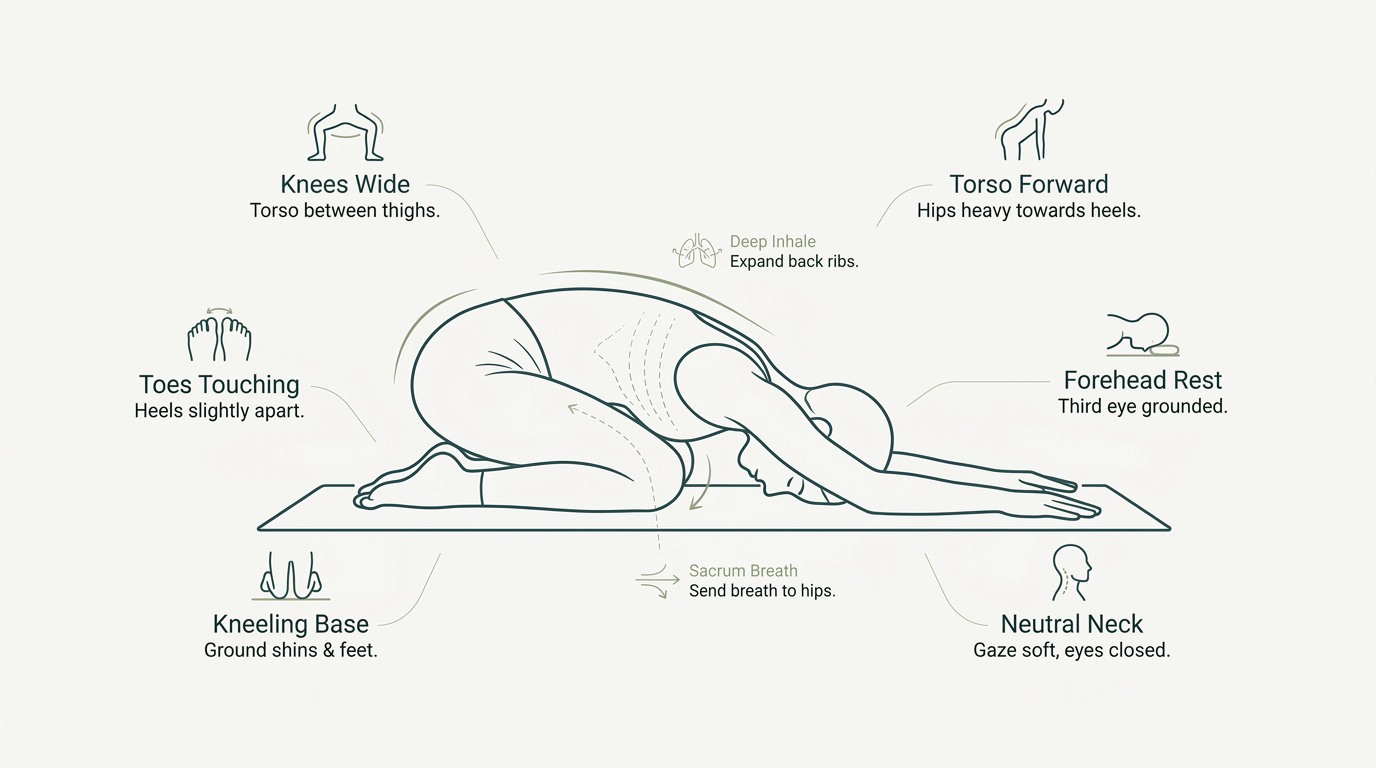
Balasana requires kneeling with big toes touching and knees wide to decompress the spine. This resting posture targets the lower back and hips, providing a safe refuge for emotional regulation and physical recovery during intense yoga sequences.
Establishing a stable foundation is the first step toward achieving the full restorative benefits of this posture.
- Kneel and touch big toes.
- Sit on heels with knees hip-width apart.
- Exhale and fold torso between thighs.
- Rest forehead on mat and align neck.
Setting the Base for Stability
Start by kneeling on your mat. Bring your big toes together while sitting on your heels. Spread your knees wide enough for comfort.
Shift your weight back steadily. Ensure your shins press evenly into the floor to create a solid, grounded foundation.
Balance is key. Keep your hips heavy on your heels.
Aligning the Torso and Neck
Exhale and fold your torso forward between your thighs. Let your chest melt toward the mat. Extend your spine from the tailbone to the crown. This movement creates a gentle stretch for the ankles and thighs.
Rest your forehead on the ground. Keep your neck in a neutral position to avoid strain. Relax your jaw and facial muscles completely.
Proper Breathing for Deeper Release
Inhale deeply into the back of your ribs. Feel your lungs expand against your thighs. This internal pressure helps release tight muscles.
Direct your breath toward the sacrum. Imagine the space between your vertebrae growing with every slow, controlled inhalation.
Soften your shoulders. Let gravity pull them down during your exhalation.
3 Major Physiological Benefits of Balasana
Beyond the physical alignment, the internal impact of Balasana offers profound relief for both the body and the mind.
Hold for 30 seconds to several minutes; perform at least 8 to 10 deep breaths.
Relieving Lower Back and Sciatica Pain
This pose provides a passive stretch for the spine. It helps decompress the vertebrae naturally. Many practitioners find it useful for managing yoga postures for diseases like chronic back pain.
Lengthening the glutes reduces pressure on the sciatic nerve. This relief is vital for those sitting at desks all day. It creates space in the lumbar region. Consistent practice can significantly decrease lower body tension.
Impact on the Nervous System
Folding forward triggers the parasympathetic nervous system. This is the “rest and digest” mode. It effectively lowers your heart rate and blood pressure.
The pose acts as a psychological refuge. It offers a sense of safety and vulnerability. By switching off the sympathetic stress response, it helps manage anxiety. It is a powerful tool for emotional regulation and panic management.
Improving Digestion and Reducing Bloating
Resting your torso on your thighs massages the abdominal organs. This gentle compression stimulates peristalsis. It is an effective way to relieve digestive discomfort naturally.
Tension in the pelvic floor often contributes to bloating. This pose encourages those muscles to relax and release.
- Massaging internal organs
- Stimulating blood flow to the gut
- Relaxing the pelvic floor
Simple Modifications for Different Body Types
While the classic form is beneficial, adjusting the pose ensures it remains accessible and safe for every unique body.
Using Props for Maximum Comfort
Props make the pose accessible for limited mobility. Place a bolster under your chest for full support. This allows for a longer, more relaxing hold.
Use blocks to elevate your forehead if the floor feels too far. This prevents unnecessary neck strain.
Slide a folded blanket behind your knees. This reduces compression for those with sensitive joints or tight quads.
If your forehead doesn’t reach the floor, use a folded blanket or block to prevent neck strain. For knee pain, place a rolled towel in the knee crease.
Safe Adjustments for Pregnancy and Injuries
Pregnant practitioners should widen their knees significantly. This creates necessary space for the belly. Keeping the head slightly elevated can help manage blood pressure changes. Always listen to your body to avoid any discomfort or strain during the practice.
Modify arm placement if you have shoulder injuries. You can also use a mudra for acid relief if lying flat causes heartburn.
Choosing Between Traditional and Extended Variations
Traditional Balasana involves resting arms alongside the feet. This variation focuses on relaxing the upper back. It is perfect for deep surrender and quiet meditation.
Extended Child’s Pose requires reaching the arms forward. This version stretches the lats and shoulders more intensely.
| Variation | Primary Focus | Arm Position | Best For |
|---|---|---|---|
| Traditional | Relaxing upper back | Alongside feet, palms up | Rest and surrender |
| Extended | Stretching shoulders | Reaching forward | Active upper body release |
How to Integrate the Pose into Your Routine?
Understanding when and how to use this posture can transform your daily yoga practice into a more balanced experience.
The Function of a Counter-Pose
Use this pose to neutralize the spine. It is the perfect counter-pose after intense backbends. It helps reset the body’s alignment between demanding sequences.
Balance the energy of a vigorous vinyasa flow with a few minutes here. It provides a necessary pause for the nervous system. This is especially helpful after challenging inversions like the mastering the scorpion pose.
Transitioning Safely Between Postures
Exit the pose slowly to avoid dizziness. Lift from the tailbone and use your hands for support. Sudden movements can cause a drop in blood pressure.
Exit slowly to avoid dizziness or sudden drops in blood pressure. Lift from the tailbone while using hands for support.
Move with intention as you transition to the next posture. Keep your breath steady and calm. This mindfulness prevents injury and maintains the state of relaxation.
- Move slowly
- Support weight with hands
- Maintain steady breathing
Practicing Mindfulness and Surrender
Adopt a mental state of non-doing. Observe physical sensations without any judgment. This childs pose serves as a powerful meditation anchor during your daily practice.
Surrender to the floor and let go of stress. It is a lesson in strength and patience. Many instructors consider it a part of the personal journey for every practitioner. Embrace the stillness completely.
Mastering Balasana offers essential spinal decompression and nervous system regulation. By integrating this resting posture into your routine with proper props, you ensure immediate physical recovery and long-term stress relief. Embrace this moment of stillness now to transform your practice into a journey of profound wellbeing.