Sedentary habits often lead to rounded shoulders and persistent lower back discomfort. Modern lifestyles frequently result in kyphosis, where the thoracic spine loses its natural alignment and the posterior chain weakens from inactivity.
Practicing salabhasana provides an effective way to strengthen the muscles supporting the spine while opening the chest. This article explains the technical alignment and the specific benefits of this posture to help you restore structural integrity and improve your digestive health.
- Technique and Alignment for Salabhasana Locust Pose
- 3 Reasons This Pose Fixes Your Posture
- How Do You Modify the Pose for Beginners?
- Safety Protocols and Preventing Back Pain
Technique and Alignment for Salabhasana Locust Pose
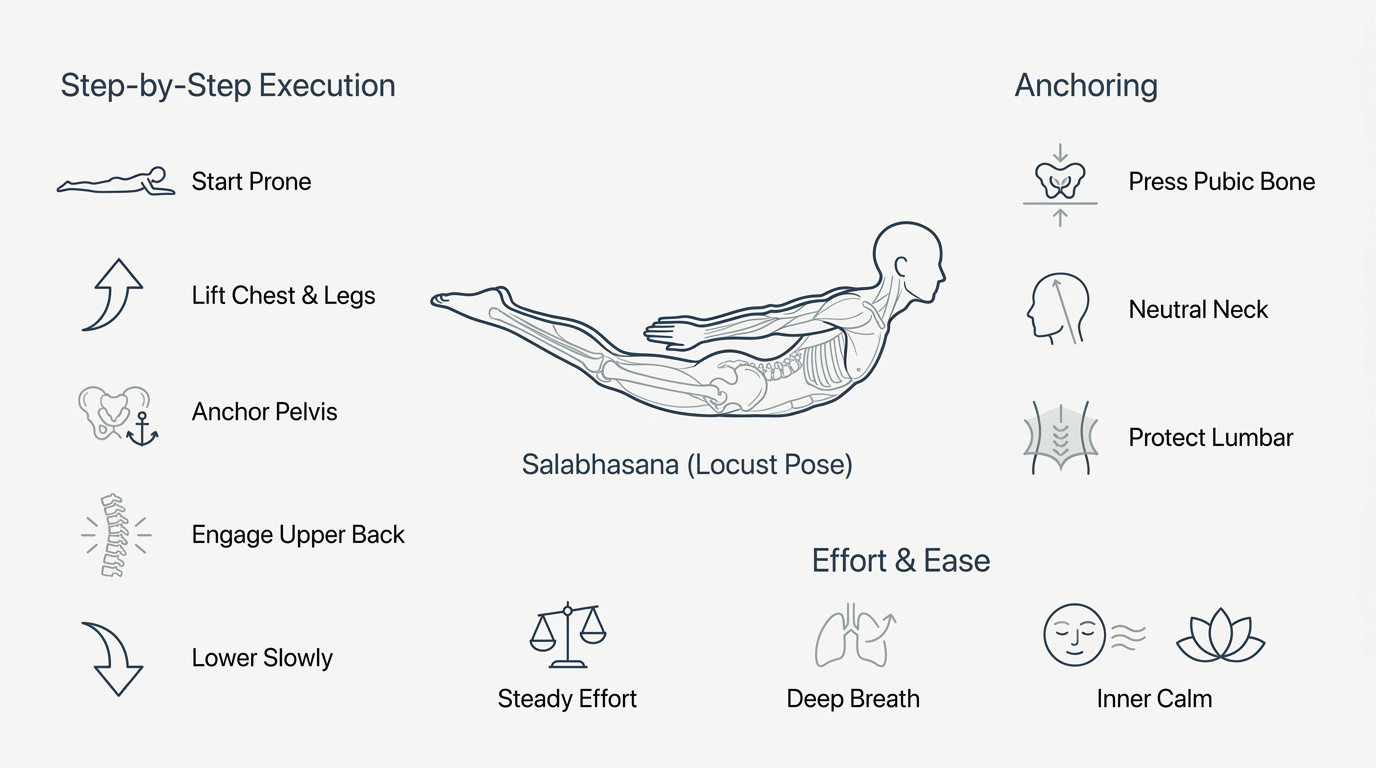
Salabhasana is a beginner-level reclining backbend from Hatha yoga that strengthens the posterior chain. Practitioners lift the chest and legs while anchoring the pelvis, using specific alignment to protect the lumbar spine and neck.
The execution starts with a precise prone setup to ensure stability before initiating the lift.
Step-by-Step Execution Guide
Start prone with legs together and arms alongside the body. Exhale as you lift your head, chest, and legs simultaneously. Keep your weight centered on the abdomen. Reach back through your fingertips to engage the upper back muscles effectively.
- Lie prone with legs together.
- Exhale and lift head, chest, and legs.
- Reach back with fingertips.
- Lower slowly and rest forehead.
Lower down slowly with a controlled breath. Rest your forehead on the floor to release tension immediately during this execution of the posture.
Anchoring the Pelvis and Neck
Press your pubic bone firmly into the mat. This anchoring creates a slight anterior pelvic tilt. It protects your lower back from unnecessary compression during the lift.
Keep your gaze directed toward the floor. Avoid craning your neck upward to look forward. A neutral spine ensures energy flows freely without straining the cervical vertebrae.
Balancing Effort and Ease
Find the balance between Sthira and Sukham in the pose. Effort should feel steady but never forced. Breathe deeply into the lungs. This expansion helps you lift higher while maintaining inner calm.
3 Reasons This Pose Fixes Your Posture
Beyond the physical execution, the real magic of Salabhasana lies in how it systematically rebuilds your structural integrity.
Muscle Engagement and Anatomy
The erector spinae muscles work hard to extend the spine. Your glutes and hamstrings fire up to stabilize the legs. This synergy creates a powerful support system for your entire back.
Your shoulders retract and strengthen as the arms reach back. This engagement opens the chest area. It builds the endurance needed to hold an upright position throughout the day.
Counteracting Sedentary Habits
Modern life often leads to rounded shoulders and kyphosis. This pose directly reverses that slouching pattern. It stretches tight pectoral muscles while strengthening the weak back. Incorporating this into a daily routine provides instant relief for desk-bound workers.
Spinal extension is the perfect antidote to hours spent sitting. It restores the natural curve of your lumbar spine.
Digestive and Nervous System Impact
The pressure on the abdomen stimulates internal organs. This massage aids digestion and boosts metabolic function. It also gently influences the thyroid gland through the subtle lift of the chest.
Practicing Salabhasana activates the parasympathetic nervous system. This shift helps reduce stress levels effectively. You leave the mat feeling both energized and deeply grounded in your body, honoring the traditional classification of this asana.
- Nervous System: Calms the brain and reduces anxiety.
- Digestion: Relieves constipation and flatulence.
- Endocrine: Stimulates thyroid function via chest lift.
How Do You Modify the Pose for Beginners?
While the full expression is the goal, many practitioners find that starting with smart modifications makes the journey much more accessible.
Half Locust and Arm Variations
Try lifting only your upper body while keeping feet down. Alternatively, lift one leg at a time to build strength gradually. This Half Locust variation reduces the load on the lower back. It allows beginners to focus on proper alignment cues.
Interlace your hands behind your back to deepen the shoulder opening. Use your hands on the floor for support.
If lifting both ends is too difficult, place hands on the floor slightly behind the shoulders and push gently to assist the torso lift.
Using Blankets and Props
Place a folded blanket under your hip bones. This padding prevents discomfort from the floor pressure. It allows you to stay in the pose longer without distraction from physical irritation.
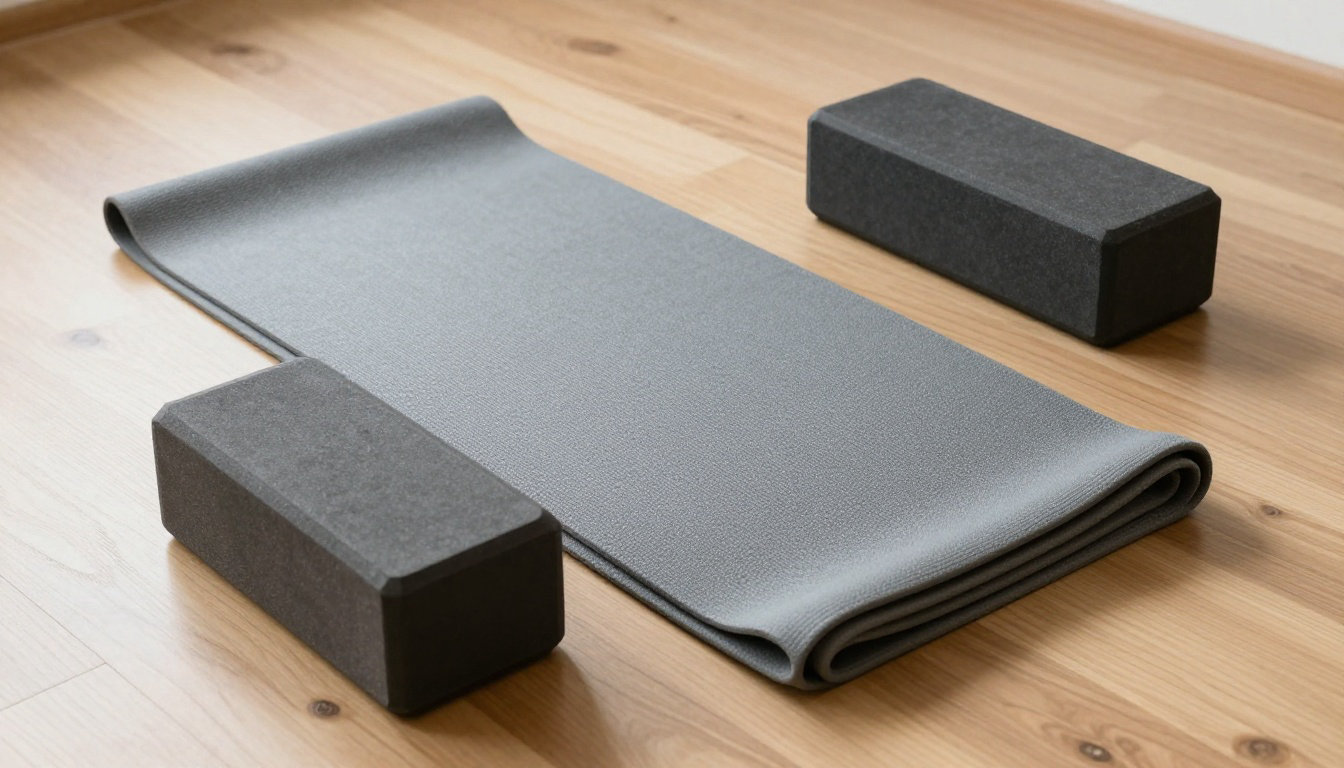
Props help maintain integrity when mobility is limited. Blocks can stabilize the torso for some variations. Using these tools ensures safety while you develop the necessary flexibility for deeper bends.
- Folded blanket for hip cushioning
- Yoga blocks for torso stability
- Strap for arm reach assistance
Progressive Sequencing Strategies
Warm up with Cobra or Hero Pose before attempting salabhasana. These preparatory shapes prime the spine for extension. Integrate the pose into a Vinyasa flow after Sun Salutations. This timing ensures your muscles are warm and ready for the backbend.
Move from simple variations to the full expression slowly. Consistency is the key to mastering this challenging posture safely.
Safety Protocols and Preventing Back Pain
Mastery of Salabhasana is not just about the lift; it is about respecting the boundaries of your anatomy to prevent injury.
Avoiding Common Alignment Errors
Do not crunch your lumbar spine to gain height. Focus on lengthening the body from head to toe. This horizontal expansion is more important than how high you actually lift.
Avoid clenching your glutes too tightly. Excessive tension can jam the sacroiliac joint. Keep the inner thighs rolling toward the ceiling to maintain space in the lower back area.
Contraindications and Chronic Pain
Skip this pose if you have severe sciatica or high blood pressure. Recent abdominal surgery also makes this posture unsafe. Pregnant women should avoid lying on their bellies entirely. Always consult a professional for acute injuries.
| Condition | Precaution | Modification |
|---|---|---|
| Lower back pain | Avoid compression | Lift upper body slightly |
| Neck strain | Do not look up | Keep gaze on the floor |
| Pregnancy | Abdominal risk | Avoid posture entirely |
| High blood pressure | Exertion risk | Practice gentle versions |
Listen to your body’s signals during every practice. Sharp pain is a clear sign to stop and rest immediately.
Releasing Tension with Counter-poses
Transition directly into Child’s Pose after your repetitions. This counter-pose gently stretches the lower back in the opposite direction. It allows the spinal muscles to relax and recover their length.
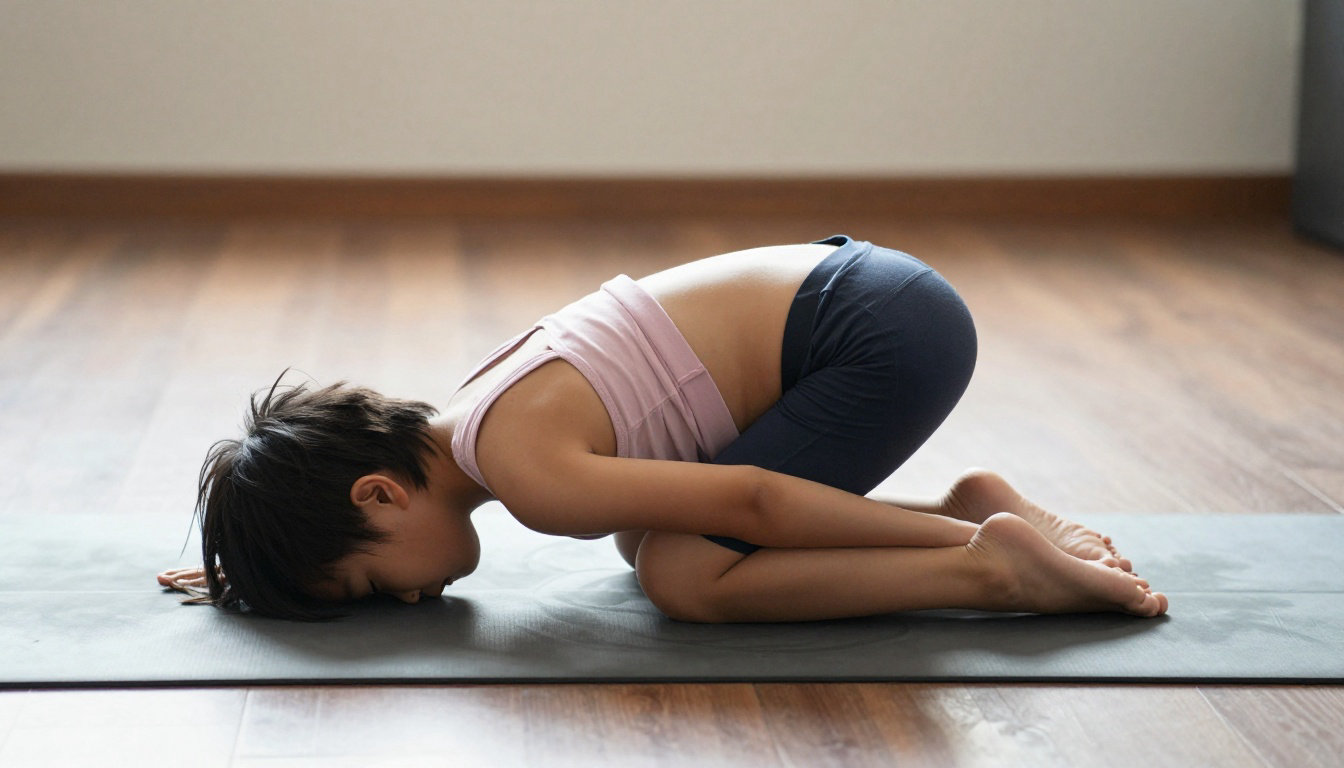
Follow up with a few rounds of Cat-Cow. This movement restores mobility to the entire spine. Resting in a neutral position ensures you integrate the benefits without carrying residual tension.
Mastering the locust pose strengthens your posterior chain, corrects kyphosis, and reverses sedentary slouching. Start today by anchoring your pelvis to stabilize the spine and boost your energy. Consistent practice ensures a resilient back and a calm mind for a healthier, more balanced future. Elevate your posture now.